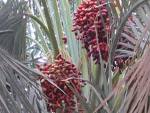
The flowering plants (angiosperms), also known as Angiospermae or Magnoliophyta, are the most diverse group of land plants. Angiosperms are seed-producing plants like the gymnosperms and can be distinguished from the gymnosperms by a series of synapomorphies (derived characteristics). These characteristics include flowers, endosperm within the seeds, and the production of fruits that contain the seeds.
The ancestors of flowering plants diverged from gymnosperms around 245–202 million years ago, and the first flowering plants known to exist are from 140 million years ago. They diversified enormously during the Lower Cretaceous and became widespread around 100 million years ago, but replaced conifers as the dominant trees only around 60-100 million years ago.
Contents :
* 1 Angiosperm derived characteristics
* 2 Evolution
* 3 Classification
o 3.1 History of classification
o 3.2 Flowering plant diversity
* 4 Vascular anatomy
* 5 The flower, fruit, and seed
o 5.1 Flowers
o 5.2 Fertilization and embryogenesis
o 5.3 Fruit and seed
* 6 Economic importance
* 7 See also
* 8 References
* 9 External links
Flowering plants
Magnolia virginiana
Sweet Bay
Scientific classification
Kingdom : Plantae
Division : Angiospermae Lindley[1] [P.D. Cantino & M.J. Donoghue][2]
Clades
Amborellaceae
Nymphaeales
Austrobaileyales
Mesangiospermae
* Ceratophyllaceae
* Chloranthaceae
* Eudicotyledoneae (eudicots)
* Magnoliidae
* Monocotyledoneae (monocots)
Synonyms :
Anthophyta
Magnoliophyta Cronquist, Takht. & W.Zimm., 1966
Angiosperm derived characteristics
* Flowers
The flowers, which are the reproductive organs of flowering plants, are the most remarkable feature distinguishing them from other seed plants. Flowers aid angiosperms by enabling a wider range of adaptability and broadening the ecological niches open to them. This has allowed flowering plants to largely dominate terrestrial ecosystems.
* Stamens with two pairs of pollen sacs
Stamens are much lighter than the corresponding organs of gymnosperms and have contributed to the diversification of angiosperms through time with adaptations to specialized pollination syndromes, such as particular pollinators. Stamens have also become modified through time to prevent self-fertilization, which has permitted further diversification, allowing angiosperms eventually to fill more niches.
* Reduced male parts, three cells
The male gametophyte in angiosperms is significantly reduced in size compared to those of gymnosperm seed plants. The smaller pollen decreases the time from pollination — the pollen grain reaching the female plant — to fertilization of the ovary; in gymnosperms fertilization can occur up to a year after pollination, while in angiosperms the fertilization begins very soon after pollination. The shorter time leads to angiosperm plants setting seeds sooner and faster than gymnosperms, which is a distinct evolutionary advantage.
* Closed carpel enclosing the ovules (carpel or carpels and accessory parts may become the fruit)
The closed carpel of angiosperms also allows adaptations to specialized pollination syndromes and controls. This helps to prevent self-fertilization, thereby maintaining increased diversity. Once the ovary is fertilized, the carpel and some surrounding tissues develop into a fruit. This fruit often serves as an attractant to seed-dispersing animals. The resulting cooperative relationship presents another advantage to angiosperms in the process of dispersal.
* Reduced female gametophyte, seven cells with eight nuclei
The reduced female gametophyte, like the reduced male gametophyte, may be an adaptation allowing for more rapid seed set, eventually leading to such flowering plant adaptations as annual herbaceous life cycles, allowing the flowering plants to fill even more niches.
* Endosperm
Endosperm formation generally begins after fertilization and before the first division of the zygote. Endosperm is a highly nutritive tissue that can provide food for the developing embryo, the cotyledons, and sometimes for the seedling when it first appears.
These distinguishing characteristics taken together have made the angiosperms the most diverse and numerous land plants and the most commercially important group to humans. The major exception to the dominance of terrestrial ecosystems by flowering plants is the coniferous forest.
Evolution
Further information: Evolutionary history of plants Flowers
Fossilized spores suggest that higher plants (embryophytes) have lived on the land for at least 475 million years.[3] Early land plants reproduced sexually with flagellated, swimming sperm, like the green algae from which they evolved. An adaptation to terrestrialization was the development of upright meiosporangia for dispersal by spores to new habitats. This feature is lacking in the descendants of their nearest algal relatives, the Charophycean green algae. A later terrestrial adaptation took place with retention of the delicate, avascular sexual stage, the gametophyte, within the tissues of the vascular sporophyte. This occurred by spore germination within sporangia rather than spore release, as in non-seed plants. A current example of how this might have happened can be seen in the precocious spore germination in Sellaginella, the spike-moss. The result for the ancestors of angiosperms was enclosing them in a case, the seed. The first seed bearing plants, like the ginkgo, and conifers (such as pines and firs), did not produce flowers. Interestingly, the pollen grains (males) of Ginkgo and cycads produce a pair of flagellated, mobile sperm cells that "swim" down the developing pollen tube to the female and her eggs.
The apparently sudden appearance of relatively modern flowers in the fossil record initially posed such a problem for the theory of evolution that it was called an "abominable mystery" by Charles Darwin.[4] However, the fossil record has considerably grown since the time of Darwin, and recently discovered angiosperm fossils such as Archaefructus, along with further discoveries of fossil gymnosperms, suggest how angiosperm characteristics may have been acquired in a series of steps. Several groups of extinct gymnosperms, particularly seed ferns, have been proposed as the ancestors of flowering plants but there is no continuous fossil evidence showing exactly how flowers evolved. Some older fossils, such as the upper Triassic Sanmiguelia, have been suggested. Based on current evidence, some propose that the ancestors of the angiosperms diverged from an unknown group of gymnosperms during the late Triassic (245–202 million years ago). A close relationship between angiosperms and gnetophytes, proposed on the basis of morphological evidence, has more recently been disputed on the basis of molecular evidence that suggest gnetophytes are instead more closely related to other gymnosperms.
The evolution of seed plants and later angisperms appear to be the result of two distinct rounds of whole genome duplication events.[5] These occurred in 319 million years ago and 192 million years ago respectively.
The earliest known macrofossil confidently identified as an angiosperm, Archaefructus liaoningensis, is dated to about 125 million years BP (the Cretaceous period),[6] while pollen considered to be of angiosperm origin takes the fossil record back to about 130 million years BP. However, one study has suggested that the early-middle Jurassic plant Schmeissneria, traditionally considered a type of ginkgo, may be the earliest known angiosperm, or at least a close relative.[7] Additionally, circumstantial chemical evidence has been found for the existence of angiosperms as early as 250 million years ago. Oleanane, a secondary metabolite produced by many flowering plants, has been found in Permian deposits of that age together with fossils of gigantopterids.[8][9] Gigantopterids are a group of extinct seed plants that share many morphological traits with flowering plants, although they are not known to have been flowering plants themselves.
Recent DNA analysis based on molecular systematics [10][11] showed that Amborella trichopoda, found on the Pacific island of New Caledonia, belongs to a sister group of the other flowering plants, and morphological studies [12] suggest that it has features that may have been characteristic of the earliest flowering plants.
The orders Amborellales, Nymphaeales and Austrobaileyales diverged as separate lineages from the remaining angiosperm clade at a very early stage in flowering plant evolution.[13]
The great angiosperm radiation, when a great diversity of angiosperms appears in the fossil record, occurred in the mid-Cretaceous (approximately 100 million years ago). However, a study in 2007 estimated that the division of the five most recent (the genus Ceratophyllum, the family Chloranthaceae, the eudicots, the magnoliids, and the monocots) of the eight main groups occurred around 140 million years ago.[14] By the late Cretaceous, angiosperms appear to have dominated environments formerly occupied by ferns and cycadophytes, but large canopy-forming trees replaced conifers as the dominant trees only close to the end of the Cretaceous 65 millions years ago or even later, at the beginning of the Tertiary.[15] The radiation of herbaceous angiosperm occurred much later.[16] Yet, many fossil plants recognizable as belonging to modern families (including beech, oak, maple, and magnolia) appeared already at late Cretaceous.
Two bees on a flower head of Creeping Thistle, Cirsium arvense
It is generally assumed that the function of flowers, from the start, was to involve mobile animals in their reproduction processes. That is, pollen can be scattered even if the flower is not brightly colored or oddly shaped in a way that attracts animals; however, by expending the energy required to create such traits, angiosperms can enlist the aid of animals and thus reproduce more efficiently.
Island genetics provides one proposed explanation for the sudden, fully developed appearance of flowering plants. Island genetics is believed to be a common source of speciation in general, especially when it comes to radical adaptations that seem to have required inferior transitional forms. Flowering plants may have evolved in an isolated setting like an island or island chain, where the plants bearing them were able to develop a highly specialized relationship with some specific animal (a wasp, for example). Such a relationship, with a hypothetical wasp carrying pollen from one plant to another much the way fig wasps do today, could result in both the plant(s) and their partners developing a high degree of specialization. Note that the wasp example is not incidental; bees, which apparently evolved specifically due to mutualistic plant relationships, are descended from wasps.
Animals are also involved in the distribution of seeds. Fruit, which is formed by the enlargement of flower parts, is frequently a seed-dispersal tool that attracts animals to eat or otherwise disturb it, incidentally scattering the seeds it contains (see frugivory). While many such mutualistic relationships remain too fragile to survive competition and to spread widely, flowering proved to be an unusually effective means of reproduction, spreading (whatever its origin) to become the dominant form of land plant life.
Flower ontogeny uses a combination of genes normally responsible for forming new shoots.[17] The most primitive flowers are thought to have had a variable number of flower parts, often separate from (but in contact with) each other. The flowers would have tended to grow in a spiral pattern, to be bisexual (in plants, this means both male and female parts on the same flower), and to be dominated by the ovary (female part). As flowers grew more advanced, some variations developed parts fused together, with a much more specific number and design, and with either specific sexes per flower or plant, or at least "ovary inferior".
Flower evolution continues to the present day; modern flowers have been so profoundly influenced by humans that some of them cannot be pollinated in nature. Many modern, domesticated flowers used to be simple weeds, which only sprouted when the ground was disturbed. Some of them tended to grow with human crops, perhaps already having symbiotic companion plant relationships with them, and the prettiest did not get plucked because of their beauty, developing a dependence upon and special adaptation to human affection.[18]
A few palaeontologists have also come up with a theory that flowering plants, or angiosperms, might possibly have evolved because of dinosaurs; in other words, they believe that dinosaurs "created" flowers. One of the theory's biggest proponents is Robert T. Bakker. He theorizes that herbivorous dinosaurs, with their eating habits, forced plants to find new ways to develop new adaptations, in order to avoid predation by herbivores.[citation needed]
Classification
The ancestors of flowering plants diverged from gymnosperms around 245–202 million years ago, and the first flowering plants known to exist are from 140 million years ago. They diversified enormously during the Lower Cretaceous and became widespread around 100 million years ago, but replaced conifers as the dominant trees only around 60-100 million years ago.
Contents :
* 1 Angiosperm derived characteristics
* 2 Evolution
* 3 Classification
o 3.1 History of classification
o 3.2 Flowering plant diversity
* 4 Vascular anatomy
* 5 The flower, fruit, and seed
o 5.1 Flowers
o 5.2 Fertilization and embryogenesis
o 5.3 Fruit and seed
* 6 Economic importance
* 7 See also
* 8 References
* 9 External links
Flowering plants
Magnolia virginiana
Sweet Bay
Scientific classification
Kingdom : Plantae
Division : Angiospermae Lindley[1] [P.D. Cantino & M.J. Donoghue][2]
Clades
Amborellaceae
Nymphaeales
Austrobaileyales
Mesangiospermae
* Ceratophyllaceae
* Chloranthaceae
* Eudicotyledoneae (eudicots)
* Magnoliidae
* Monocotyledoneae (monocots)
Synonyms :
Anthophyta
Magnoliophyta Cronquist, Takht. & W.Zimm., 1966
 |
| Natural (Magnolia virginiana) |
 |
| Natural (Magnolia virginiana) |
* Flowers
The flowers, which are the reproductive organs of flowering plants, are the most remarkable feature distinguishing them from other seed plants. Flowers aid angiosperms by enabling a wider range of adaptability and broadening the ecological niches open to them. This has allowed flowering plants to largely dominate terrestrial ecosystems.
* Stamens with two pairs of pollen sacs
Stamens are much lighter than the corresponding organs of gymnosperms and have contributed to the diversification of angiosperms through time with adaptations to specialized pollination syndromes, such as particular pollinators. Stamens have also become modified through time to prevent self-fertilization, which has permitted further diversification, allowing angiosperms eventually to fill more niches.
* Reduced male parts, three cells
The male gametophyte in angiosperms is significantly reduced in size compared to those of gymnosperm seed plants. The smaller pollen decreases the time from pollination — the pollen grain reaching the female plant — to fertilization of the ovary; in gymnosperms fertilization can occur up to a year after pollination, while in angiosperms the fertilization begins very soon after pollination. The shorter time leads to angiosperm plants setting seeds sooner and faster than gymnosperms, which is a distinct evolutionary advantage.
* Closed carpel enclosing the ovules (carpel or carpels and accessory parts may become the fruit)
The closed carpel of angiosperms also allows adaptations to specialized pollination syndromes and controls. This helps to prevent self-fertilization, thereby maintaining increased diversity. Once the ovary is fertilized, the carpel and some surrounding tissues develop into a fruit. This fruit often serves as an attractant to seed-dispersing animals. The resulting cooperative relationship presents another advantage to angiosperms in the process of dispersal.
* Reduced female gametophyte, seven cells with eight nuclei
The reduced female gametophyte, like the reduced male gametophyte, may be an adaptation allowing for more rapid seed set, eventually leading to such flowering plant adaptations as annual herbaceous life cycles, allowing the flowering plants to fill even more niches.
* Endosperm
Endosperm formation generally begins after fertilization and before the first division of the zygote. Endosperm is a highly nutritive tissue that can provide food for the developing embryo, the cotyledons, and sometimes for the seedling when it first appears.
These distinguishing characteristics taken together have made the angiosperms the most diverse and numerous land plants and the most commercially important group to humans. The major exception to the dominance of terrestrial ecosystems by flowering plants is the coniferous forest.
Evolution
Further information: Evolutionary history of plants Flowers
Fossilized spores suggest that higher plants (embryophytes) have lived on the land for at least 475 million years.[3] Early land plants reproduced sexually with flagellated, swimming sperm, like the green algae from which they evolved. An adaptation to terrestrialization was the development of upright meiosporangia for dispersal by spores to new habitats. This feature is lacking in the descendants of their nearest algal relatives, the Charophycean green algae. A later terrestrial adaptation took place with retention of the delicate, avascular sexual stage, the gametophyte, within the tissues of the vascular sporophyte. This occurred by spore germination within sporangia rather than spore release, as in non-seed plants. A current example of how this might have happened can be seen in the precocious spore germination in Sellaginella, the spike-moss. The result for the ancestors of angiosperms was enclosing them in a case, the seed. The first seed bearing plants, like the ginkgo, and conifers (such as pines and firs), did not produce flowers. Interestingly, the pollen grains (males) of Ginkgo and cycads produce a pair of flagellated, mobile sperm cells that "swim" down the developing pollen tube to the female and her eggs.
 |
| Natural (Malus sylvestris (crab apple)) |
 |
| Natural (Malus sylvestris (crab apple)) |
 |
| Natural (Two bees on a flower head of Creeping Thistle, Cirsium arvense) |
 |
| Natural (Two bees on a flower head of Creeping Thistle, Cirsium arvense) |
The evolution of seed plants and later angisperms appear to be the result of two distinct rounds of whole genome duplication events.[5] These occurred in 319 million years ago and 192 million years ago respectively.
The earliest known macrofossil confidently identified as an angiosperm, Archaefructus liaoningensis, is dated to about 125 million years BP (the Cretaceous period),[6] while pollen considered to be of angiosperm origin takes the fossil record back to about 130 million years BP. However, one study has suggested that the early-middle Jurassic plant Schmeissneria, traditionally considered a type of ginkgo, may be the earliest known angiosperm, or at least a close relative.[7] Additionally, circumstantial chemical evidence has been found for the existence of angiosperms as early as 250 million years ago. Oleanane, a secondary metabolite produced by many flowering plants, has been found in Permian deposits of that age together with fossils of gigantopterids.[8][9] Gigantopterids are a group of extinct seed plants that share many morphological traits with flowering plants, although they are not known to have been flowering plants themselves.
Recent DNA analysis based on molecular systematics [10][11] showed that Amborella trichopoda, found on the Pacific island of New Caledonia, belongs to a sister group of the other flowering plants, and morphological studies [12] suggest that it has features that may have been characteristic of the earliest flowering plants.
The orders Amborellales, Nymphaeales and Austrobaileyales diverged as separate lineages from the remaining angiosperm clade at a very early stage in flowering plant evolution.[13]
The great angiosperm radiation, when a great diversity of angiosperms appears in the fossil record, occurred in the mid-Cretaceous (approximately 100 million years ago). However, a study in 2007 estimated that the division of the five most recent (the genus Ceratophyllum, the family Chloranthaceae, the eudicots, the magnoliids, and the monocots) of the eight main groups occurred around 140 million years ago.[14] By the late Cretaceous, angiosperms appear to have dominated environments formerly occupied by ferns and cycadophytes, but large canopy-forming trees replaced conifers as the dominant trees only close to the end of the Cretaceous 65 millions years ago or even later, at the beginning of the Tertiary.[15] The radiation of herbaceous angiosperm occurred much later.[16] Yet, many fossil plants recognizable as belonging to modern families (including beech, oak, maple, and magnolia) appeared already at late Cretaceous.
Two bees on a flower head of Creeping Thistle, Cirsium arvense
It is generally assumed that the function of flowers, from the start, was to involve mobile animals in their reproduction processes. That is, pollen can be scattered even if the flower is not brightly colored or oddly shaped in a way that attracts animals; however, by expending the energy required to create such traits, angiosperms can enlist the aid of animals and thus reproduce more efficiently.
Island genetics provides one proposed explanation for the sudden, fully developed appearance of flowering plants. Island genetics is believed to be a common source of speciation in general, especially when it comes to radical adaptations that seem to have required inferior transitional forms. Flowering plants may have evolved in an isolated setting like an island or island chain, where the plants bearing them were able to develop a highly specialized relationship with some specific animal (a wasp, for example). Such a relationship, with a hypothetical wasp carrying pollen from one plant to another much the way fig wasps do today, could result in both the plant(s) and their partners developing a high degree of specialization. Note that the wasp example is not incidental; bees, which apparently evolved specifically due to mutualistic plant relationships, are descended from wasps.
Animals are also involved in the distribution of seeds. Fruit, which is formed by the enlargement of flower parts, is frequently a seed-dispersal tool that attracts animals to eat or otherwise disturb it, incidentally scattering the seeds it contains (see frugivory). While many such mutualistic relationships remain too fragile to survive competition and to spread widely, flowering proved to be an unusually effective means of reproduction, spreading (whatever its origin) to become the dominant form of land plant life.
Flower ontogeny uses a combination of genes normally responsible for forming new shoots.[17] The most primitive flowers are thought to have had a variable number of flower parts, often separate from (but in contact with) each other. The flowers would have tended to grow in a spiral pattern, to be bisexual (in plants, this means both male and female parts on the same flower), and to be dominated by the ovary (female part). As flowers grew more advanced, some variations developed parts fused together, with a much more specific number and design, and with either specific sexes per flower or plant, or at least "ovary inferior".
Flower evolution continues to the present day; modern flowers have been so profoundly influenced by humans that some of them cannot be pollinated in nature. Many modern, domesticated flowers used to be simple weeds, which only sprouted when the ground was disturbed. Some of them tended to grow with human crops, perhaps already having symbiotic companion plant relationships with them, and the prettiest did not get plucked because of their beauty, developing a dependence upon and special adaptation to human affection.[18]
A few palaeontologists have also come up with a theory that flowering plants, or angiosperms, might possibly have evolved because of dinosaurs; in other words, they believe that dinosaurs "created" flowers. One of the theory's biggest proponents is Robert T. Bakker. He theorizes that herbivorous dinosaurs, with their eating habits, forced plants to find new ways to develop new adaptations, in order to avoid predation by herbivores.[citation needed]
Classification
| Angiospermae |
| |||||||||||||||||||||||||||||||||||||||||||||
The phylogeny of the flowering plants, as of APG III (2009).[19]
| Angiospermae |
| |||||||||||||||||||||||||||||||||||||||||||||